
Red Flags / Plant and Warehouse Floors
RED FLAG · PLANT FLOOR
Crumbling Joint Edges on a Plant Floor
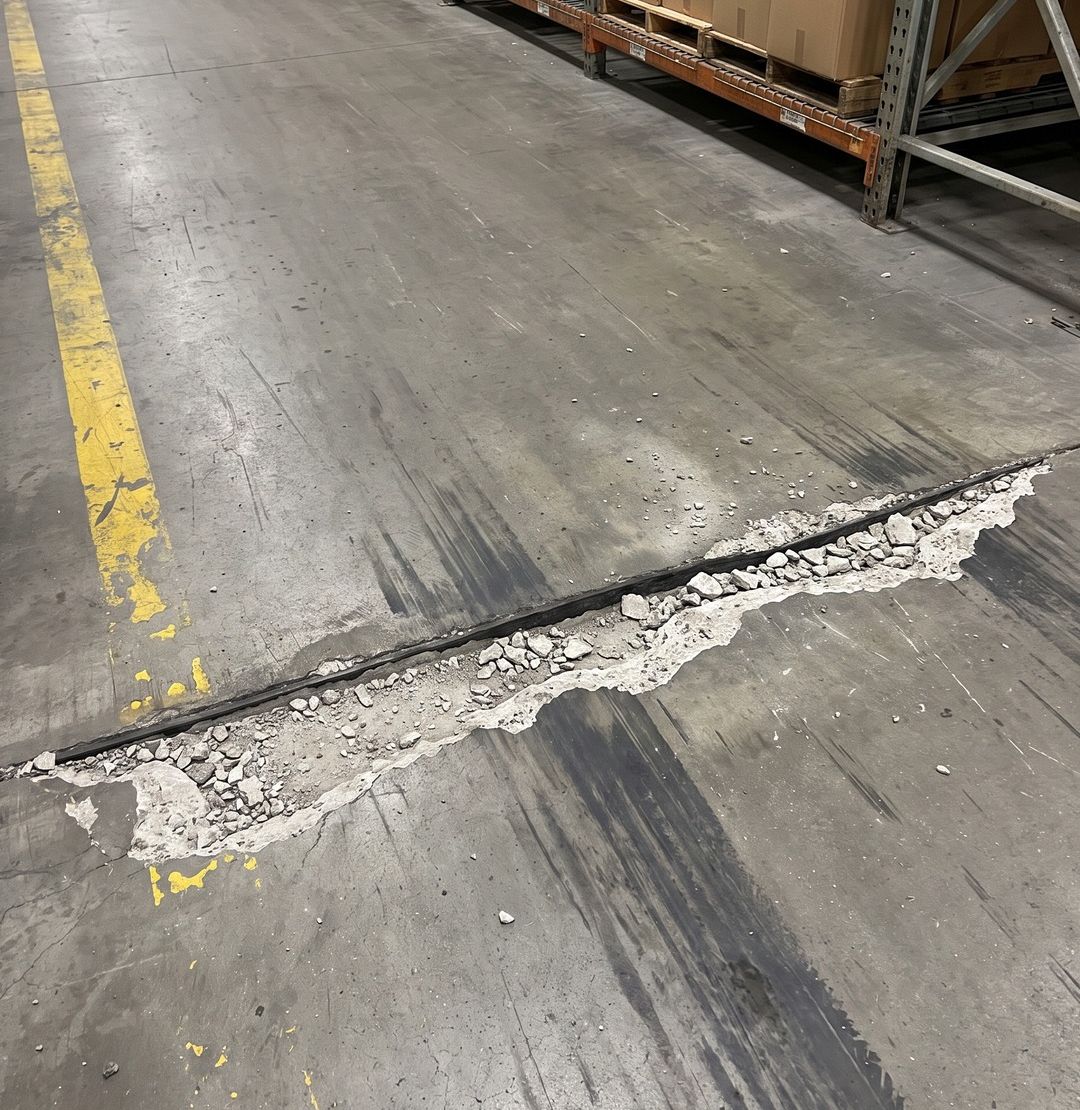
Plant and warehouse floors are cut into panels with joints, so the slab can shrink without cracking at random. Those joints are meant to be filled. When the filler wears out or was never put in, every forklift wheel that crosses the joint hits an open edge, and the concrete along it starts to chip and break away.
Walk your busiest aisles. Look for joint edges that are chipped or crumbling and loose pieces sitting in the gap. You will often hear it before you see it: a forklift that bangs every time it crosses.
Once the edges start to go, each crossing hits harder and the damage spreads along the joint. The repair rebuilds the broken edges and fills the joint with a material made for forklift traffic. It is a much smaller job before the edges are gone than after.
If you see this in your facility, send a photo and the address to info@ccrs-services.com.
Email a photoMORE RED FLAGS
Keep Walking the Property
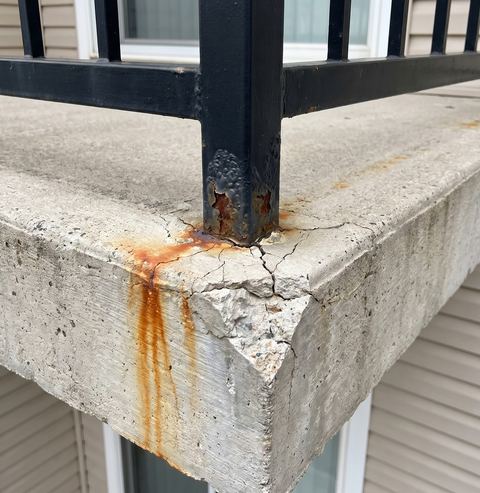
Rust and Cracked Concrete at a Balcony Railing Post
Water that sits at the base of a steel railing post rusts it below the surface until the concrete around it cracks. What to check on every post, and when to keep people off a balcony.
What it means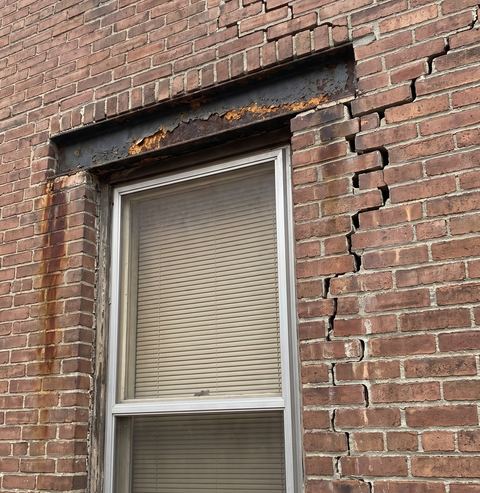
A Stepped Crack and a Rust Stain Above a Window
A stair-step crack in the brick and rust running down from the top of a window usually mean the steel lintel over the opening is rusting. What it means and what the fix involves.
What it means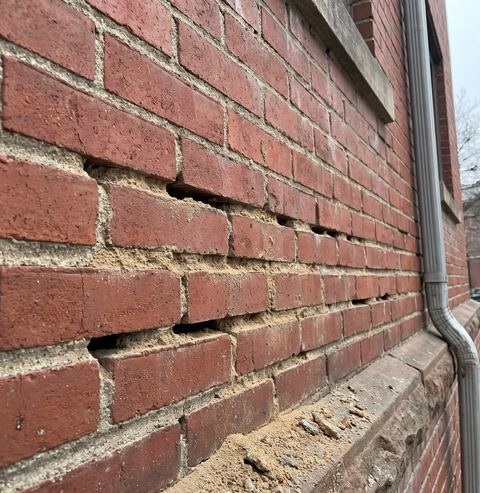
Mortar Joints Worn Back from the Face of the Brick
Recessed, sandy mortar joints let water into a brick wall. A simple key test, where to look, and why tuckpointing early beats rebuilding a section of wall.
What it meansCONTACT
Tell Us What Is Failing. We Will Come Look.
Send a few photos, the address, and what you are seeing. We will assess it and come back to you with a straight answer, including whether it is worth fixing at all.
info@ccrs-services.com